





The construction industry stands at a pivotal moment. In the wake of the Grenfell Tower tragedy, scrutiny has intensified around issues of competency and accountability – exposing significant gaps across multiple disciplines. In a dedicated roundtable sponsored by leading balcony systems manufacturer, Sapphire Balconies, hosted at the offices of law firm Browne Jacobson, Tall Buildings Media brought together a panel of experts, where the discussion focused on defining competency, evaluating enforcement mechanisms, emphasising the importance of collaboration, and examining how these elements play a vital role in achieving the industry’s urgent objective – successfully navigating Gateway 2.
As the industry continues to navigate the complexities of interpreting BSR guidance, roundtable chair, Darren Richards – Managing Director of Cogent Consulting – aptly sought to first clarify everyone’s understanding and definition of ‘competency’. Participants agreed that any comprehensive definition of competency in building safety regulation must encompass both technical expertise and behavioural elements. Paula Chandler, National Design Director at Wates, explained: “You can default to SKEB, so skills, knowledge, experience and behaviour, but I actually think it’s much more about the people, about the culture and behaviours. You might think you’re competent but what are we benchmarking that against?” She described Wates’ own approach to implementing competence, which involves developing an internal matrix to assess staff, with plans to apply the same system to consultants and suppliers. “We’re using tools and processes to try and take the emotion out.”
Competency, or ‘competence’?
Peter Caplehorn, Chief Executive of the Construction Products Association, expressed a preference for using the term ‘competence’, pointing to its significance in the post-Grenfell
context. The CPA has played a central role in advancing competence across the sector, collaborating with the Industry Competence Steering Group and the Construction Leadership Council on key publications such as the ‘Raising the Bar Report’, ‘Setting the Bar’ and ‘A Higher Bar’. These reports reflect the industry’s collective efforts to strengthen competence standards. Peter also drew attention to the difficulties faced by SMEs and micro-enterprises in keeping pace: “My worry is that all the leading light companies are doing their level best to move forward, but we are lacking in terms of the long tail of the industry.”
Taking a broader view, Veronica Fiore, a Class 3 RBI, stressed that competence encompasses not just individual capability but also organisational capacity. She observed that while large developers are increasingly adopting matrices informed by regulatory feedback, smaller players continue to face considerable obstacles. She also highlighted that behavioural factors – such as trust, understanding and cultural change – remain the most difficult to measure.
Ron Hedger of FireTec succinctly stated that in fire safety, true competency simply means ensuring the job is done correctly. While SKEB methods can reduce the need for onsite inspections, they provide only an indirect indication rather than a genuine proof of competence. He emphasised that competency must be demonstrated in both design and installation, covering not only the physical systems but also the underlying fire strategies.
For Sapphire Balconies, compliance alone does not guarantee safety. Drawing on his experience of ‘bouncy balconies’, Brand Director Nick Haughton remarked: “Compliance alone doesn’t guarantee safety – a balcony can be technically compliant and still feel unsafe, which is why we’ve had to push for higher standards and benchmarks beyond what the codes currently demand.” The issue is compounded by differing international standards; for example, North American regulations are considered roughly 15 years behind current UK practices. Ultimately, companies bear the responsibility for raising their competency levels and enabling individuals to enhance their skills and knowledge through structured training and development processes.
Browne Jacobson Partner, Gavin Hoccom observed: “The challenge that all built environment stakeholders face is how to take the definition or at least the requirement around competence as it’s set out in the building regulations and interpret that within the context of what that stakeholder does, and that’s a challenge which a Tier 1 contractor will face at one end of the scale and it’s a challenge which a sole trader building an extension will face at the other end of the scale.”

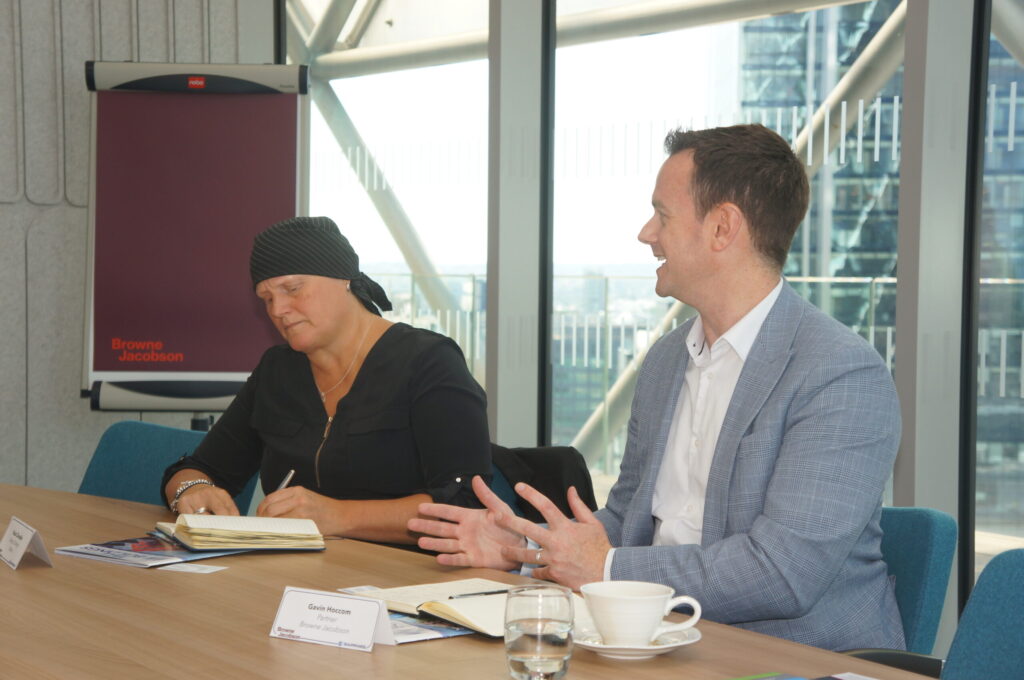
He stressed that organisations should move beyond simply responding to compliance requests and instead take a proactive stance, demonstrating competence before it is questioned. This means dedicating time and resources to building and maintaining a centralised competence framework, enabling them to meet regulatory requirements more effectively while driving a more efficient, compliant industry.
Professional development
As in many sectors, professional development often takes a back seat to revenue-generating work. Yet, the roundtable consensus was clear – both companies and individuals must prioritise and invest in upskilling by creating structured training programmes and allocating dedicated time for learning, ensuring that industry standards continue to rise despite ongoing time pressures.
Peter noted: “I run one of RIBA’s helplines and I get people all the time saying, I’m running a ‘one-man-band’, I simply haven’t got the time to X, Y and Z, which is broadly about getting themselves up to date with the latest regulations.”
Collaboration and knowledge sharing remain vital for building skills. While digital tools have proven valuable, they have also replaced much of the face-to-face interaction that once strengthened teamwork. Paula emphasised: “It’s incumbent on us to train people in those tools, but actually alongside this, we need face-to-face collaboration – let’s get round the table, roll our sleeves up and solve the problem.”
As a member of CABE’s Membership and Professional Standards Committee, Veronica spoke passionately about the importance of employer-backed support for sustainable CPD and professional growth. She argued that CPD should be built into regular work routines rather than left for individuals to manage in their own time, as this approach signals a lack of true organisational commitment.

So, what truly drives professional development – encouragement or enforcement? Ron questioned: “The bit that’s missing is what happens if you don’t demonstrate that behaviour, both as an organisation to develop and support your people to be competent, but also as an individual who maybe has had a bad day and produces something which doesn’t do the job, as a one[1]off or regularly? The two things that are missing are the rigorous enforcement, both of demonstrating competence in SKEB, but also demonstrating competence in doing the job.”
In addition to strict enforcement, positive incentives are essential to encourage the right behaviours. Nick shared Sapphire’s approach: “We have appraisals on a quarterly basis. Employees are scored on behaviours, and learning is one of the aspects that they’re scored against. If people have demonstrated good examples of doing this, they get an increase in their bonus.”
While commercial CPD solutions provide structured learning, they risk diminishing intrinsic motivation and the overall quality of outcomes. Many around the table agreed that CPDs can easily become a tick-box exercise, eroding the genuine value of learning and weakening professional development. Virtual training adds another challenge. While some sessions foster strong interaction, others – especially when participants leave their cameras off – struggle to engage attendees.
What’s needed is an aspirational culture. Healthy competition, recognition and awards can inspire people to exceed expectations, but integrity must remain at the core. Peter reflected: “I think, unfortunately, we are a little bit hard on ourselves. We have a very ‘glass half empty’ approach, whereas I think we need to somehow create a more aspirational culture for people to naturally want to get better.” Fostering this kind of culture nurtures pride and drives higher standards across the profession.
Gateway 2 challenges
A key factor prompting professionals to re-evaluate their competence has been the latest challenge posed by the Gateway 2 application process. With a high rate of rejections and invalidations, missing critical information has contributed significantly to delays and backlogs within the BSR. At Wates, however, the limited feedback available has been turned into a learning tool to track and address compliance gaps. Paula explained: “We haven’t navigated Gateway 2 fully yet, we have a number of projects in flight, but what we did do was take the rejection notices and we used that as our route map for compliance.”
The panel largely agreed that to align with the current gateway regime, methodologies, such as the RIBA Plan of Work, need updating. Paula stressed the importance of shifting mindsets away from previous practices and embracing new terminology and minimum requirements at each gateway stage.
Ron echoed this view: “The Building Safety Act is now forcing us to build correctly. I have not got any submissions actually to Gateway 2 yet, but the process is exactly the same as I have developed for any other design fire strategy and this is why I agree that the RIBA stages just don’t fit. For fire safety, they just don’t apply. They don’t correspond to the development stages of the design fire strategy.”
Uncertainty surrounding Gateway 2 guidance has long been a point of contention, with the BSR declining to provide ‘templates’, arguing that they would create a minimal benchmark for compliance. According to Nick, this has led to significant inconsistencies in how applicants demonstrate competence – some submissions are detailed and robust, while others depend on basic tick sheets. Moreover, feedback from rejected applications is rarely shared, preventing the industry from learning and improving its overall competency.
Resources and constraints
Since taking on responsibility, the BSR has been transparent about its limited resources, a sentiment echoed by those around the table. Veronica shared her experience, noting that communication with the BSR was initially strong. A case worker was assigned, and updates on applications were regularly provided through meetings and direct phone calls. However, as the number of applications increased, responses became less frequent. According to Veronica, there are no formal systems to track applications, turning the process into a waiting game without any way to monitor progress.
Peter and Nick both reflected on the serious challenges facing the market, particularly the commercial and financial impacts on the industry. They highlighted concerns about potential revenue shortfalls for businesses trading solely within the UK, as well as the long-term risk of losing supply chain capacity if the current issues continue. Peter warned: “Once we lose capacity from the supply chain, it’s gone for a long time. Skilled workers move to other industries or different manufacturing sectors, and that capacity is effectively lost. Losing key supply chain members poses a serious threat to construction across the UK.” Nick emphasised: “This seems like it isn’t a commonly-known or considered consequence of the current delays.”
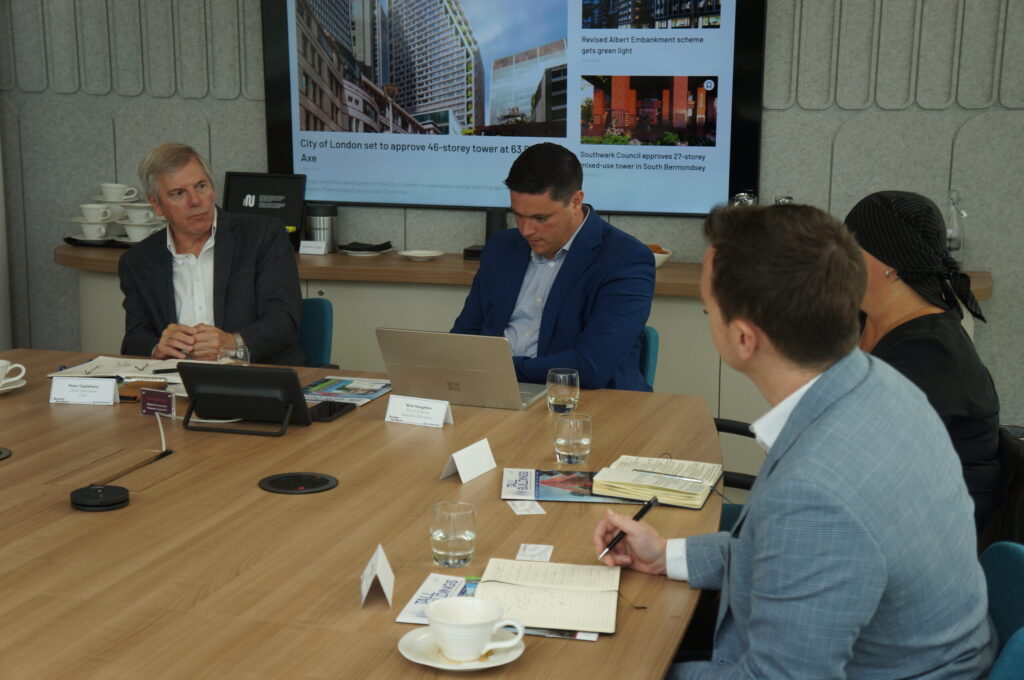
Another pressing challenge involves PCSA agreements and the risks tied to early engagement. Nick pointed out that design teams are increasingly required to commit early in the design process under PCSA agreements, which demands significant upfront work without guaranteed returns if projects fall through. He described the struggle faced by smaller firms: “They invest their limited resources early on, then face long application delays. A year later, no revenue has come in, no payment has been made for design work, and the project may still be lost down the line.” Nick emphasised the need to revise these agreements to better protect smaller companies and ease the financial pressures linked to early involvement.
A transparent system
Transparency in the application process is essential at every level. There was broad agreement around the table that not only is there significant uncertainty about what the BSR expects from a ‘successful’ application, but once an application is submitted, it effectively disappears – untraceable until a decision is made.
Paula suggested simple improvements: “An automated online system that tracks the progress of an application would be a great start. Additionally, implementing a pre-application process would help. This would involve scheduling and logging a meeting where applicants can present key compliance evidence to the regulator in advance, so they are familiar with the details rather than encountering them for the first time at the decision-making stage.”
It’s clear that the lack of feedback is a major barrier to industry development. Where is the evidence of a feedback loop back to manufacturers, enabling the creation of safer products and, ultimately, safer buildings? Regarding the Building Safety Regulator’s KPIs, Nick pointed out that current metrics don’t fully support the goals of improving application processing or enhancing industry safety. Having utilised a FOI request to obtain data, he noted: “The BSR stated their only KPI is the requirement of 80% of time to be allocated to projects, which makes sense as an individual metric. But what about guidance on moving forward and making progress? Why don’t they take more interest in the numbers similar to regulators like Ofgem who are conscious of what’s happening in the industry more generally?”
The industry must take responsibility for continuous improvement, which can only be achieved through a holistic approach – one that integrates all relevant advisory bodies and ensures information flows back into the system. This will drive practical, meaningful change.
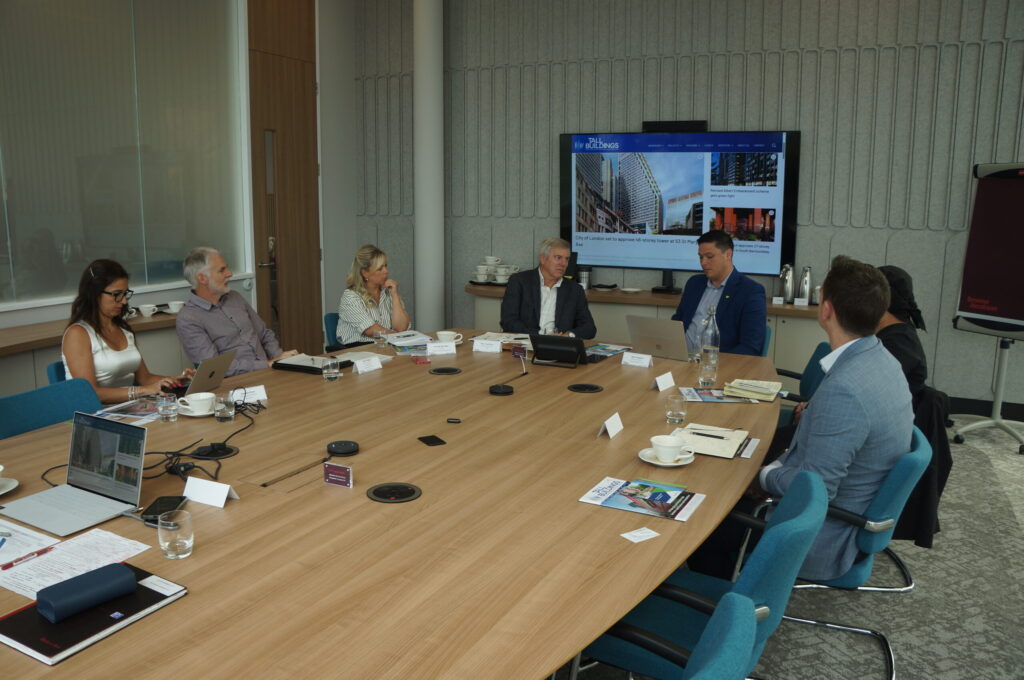
Though change is already underway, as the boardroom acknowledged and welcomed the recent leadership shake-up announced that week, with MHCLG taking the lead. Peter was quick to affirm that the new leaders at the BSR are well positioned to grasp the broader challenges. He noted that Alex Norris, along with Andy Roe and Charlie Pugsley, fully understand the task ahead – supporting the Government’s goal of delivering 1.5 million homes while prioritising residents’ safety. Peter added: “There are numerous committees, initiatives and working groups actively engaged to ensure skilled professionals are supported within the sector. I believe the new leadership will focus on ensuring all these efforts run smoothly, efficiently and continue to make progress.”
Commenting further on the new leadership, Gavin emphasised the need for consistent, positive and regular communication with the industry to restore confidence in delivering tall buildings. Paula agreed, sharing her optimism: “I genuinely believe we’re in the most transformative period the industry has seen in decades, and it truly excites me. It’s unfortunate that it took recent events to force us to reflect, but I’m incredibly excited about the future.”


The mood of positivity was shared widely. Nick added: “Peter, you mentioned about the end of the beginning. It reminds me of Churchill’s speech. I wonder whether we’re now coming to the finest hour, if you like, of actually what Paula talks about, of lot of transformative change and genuinely good thinking around projects, coupled with the movement forward in the industry to hit numbers, highly ambitious numbers, and with consideration for the commercial aspect of it. From where I’m looking at it, the delays have been starving good practices and good behaviours out of the new building industry in particular. I’m quite excited to see what happens now, but it’s not without challenges, either.”
As the discussion drew to a close, the collective sentiment was one of cautious optimism. Competency in building safety regulation, while complex and multi layered, is not an unattainable goal; it hinges on a shared commitment to raising standards through technical expertise, behavioural accountability and cultural change. The challenges, posed by Gateway 2, resource limitations and an often-ambiguous regulatory process, reaffirm the urgent need for greater transparency, collaboration and proactive professional development across the industry. Yet, with new leadership at the BSR and a renewed industry wide focus on competence, there is a feeling that transformation is underway – one that prioritises safety, fosters trust and positions the construction sector to meet the demands of the future with integrity and confidence.
With thanks to roundtable attendees:
- Darren Richards, Roundtable Chair and Managing Director, Cogent Consulting
- Nick Haughton, Brand Director, Sapphire Balconies
- Peter Caplehorn, Chief Executive, Construction Products Association
- Paula Chandler, National Design Director, Wates Construction
- Veronica Fiore, Associate Director, Hunters and Vice President, CABE
- Ron Hedger, Technical Director, TecFire
- Gavin Hoccom, Partner, Browne Jacobson
- Hannah Woodger, Editor, Tall Buildings Media

